Student Loan Forgiveness vs Paying Off Early: Choose Smart
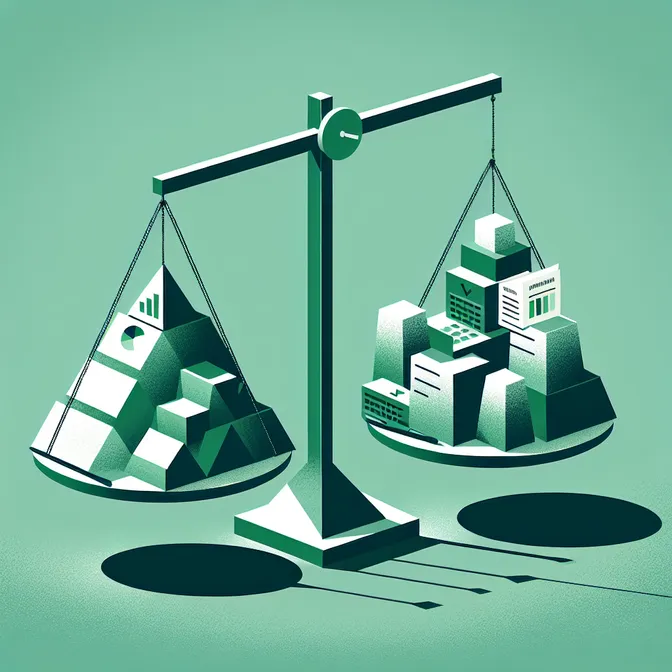
You’ve probably heard both sides of this debate.
Your parents tell you to pay off debt as fast as possible because “debt is bad.” Your coworker who teaches third grade swears by PSLF and hasn’t made a real payment in six years. A finance blogger insists you’re throwing money away if you don’t refinance and attack those loans.
So which is it?
Here’s the thing: They’re all right. And they’re all wrong. Because the answer completely depends on your specific situation, and treating all student loans the same is like using the same strategy for a $15,000 Honda Civic loan and a $150,000 mortgage.
Let’s figure out which path actually makes sense for you.
Table of Contents
- When Forgiveness Makes More Financial Sense
- When Paying Off Early Saves You Money
- The Math: Calculating Your Break-Even Point
- Federal vs Private Loans: Why This Changes Everything
- Real Scenarios: Who Should Choose What
- The Forgiveness Risk You Need to Consider
- FAQ
When Forgiveness Makes More Financial Sense
Forgiveness programs exist for a reason: to incentivize certain careers and help borrowers with low income relative to their debt load.
According to Federal Student Aid, Public Service Loan Forgiveness (PSLF) forgives your remaining balance after 120 qualifying payments while working full-time for government or nonprofit organizations. If you’re three years into teaching at a public school with $80,000 in loans and making $45,000 a year, the math is pretty clear: stick with PSLF.
Income-Driven Repayment (IDR) plans offer forgiveness after 20 or 25 years of payments based on your income and family size. These make sense when your debt is significantly larger than your annual income, and you don’t expect massive income growth.
💡 Key Takeaway: If your total student loan balance is more than twice your annual income AND you have federal loans, forgiveness programs deserve serious consideration.
The forgiveness route wins when:
- You work in public service and qualify for PSLF (teachers, government employees, nonprofit workers)
- Your income is low relative to your balance (balance is 2x+ your annual income)
- You have federal loans that qualify for IDR plans
- Your career path won’t see dramatic income increases
- You’re comfortable with 20-25 years of payments
The psychology matters too. If you’re a social worker making $38,000 with $95,000 in loans, the “pay it off fast” advice isn’t just impractical. It’s demoralizing. Your IDR payment might be $150 a month. That’s manageable. Trying to pay $1,200 a month? That’s impossible without a second job and eating ramen until you’re 50.
When Paying Off Early Saves You Money
Let’s flip the script.
You graduated with $45,000 in loans. You’re now making $85,000 as a software engineer. Your loans carry a 6.5% interest rate. Should you ride out an IDR plan for 20 years?
Absolutely not.
Bankrate notes that paying off student loans early means paying less interest over the life of the loan, improving your debt-to-income ratio, and gaining financial freedom faster. When your income significantly exceeds your debt, you’re basically volunteering to pay thousands in extra interest for no reason.
Paying off early wins when:
- Your annual income equals or exceeds your total loan balance
- You have private loans (they don’t qualify for forgiveness anyway)
- Your interest rates are above 5-6%
- You don’t qualify for PSLF
- You want to buy a house, start a business, or pursue other financial goals sooner
Pro Tip: Even if forgiveness is theoretically optimal, some people value the mental freedom of being debt-free over a few thousand dollars in interest savings. That’s a legitimate choice.
Here’s what most people miss: interest compounds. A $60,000 loan at 7% interest costs you about $4,200 in interest per year. If you stretch that over 20 years instead of paying it off in 5, you’re paying an extra $50,000+ in interest. That’s not a rounding error.
The early payoff approach also gives you options. No debt means you can take career risks, move for opportunities, or weather unexpected life changes without a $500+ monthly payment hanging over your head.
The Math: Calculating Your Break-Even Point
Listen, I’m not going to lie to you with fake precision about exactly what your specific situation will cost. But I can give you the framework to figure it out.
The break-even question is: Will I pay less by aggressively paying off my loans, or by making minimum payments for 20-25 years and banking on forgiveness?
Forgiveness path calculation:
- Monthly IDR payment × number of months (240 or 300)
- Plus potential tax on forgiven amount (roughly 20-30% of forgiven balance)
- Minus any employer matches or benefits you can take advantage of by freeing up cash flow
Aggressive payoff calculation:
- Total principal balance
- Plus interest over your payoff timeline
- Minus tax benefits from student loan interest deduction (up to $2,500 annually)
The crossover point is typically when your income-to-debt ratio hits about 1:1. Below that, forgiveness often wins. Above that, aggressive payoff usually wins.
Pursue Forgiveness
When: Debt is 2x+ your income, you qualify for PSLF, or you have federal loans with low income.
Cost: Lower monthly payments, potential tax bomb at forgiveness, 20-25 years of payments.
Example: $120,000 debt, $50,000 income, nonprofit job → PSLF saves ~$60,000+
Pay Off Early
When: Income equals or exceeds debt, private loans, high interest rates, don’t qualify for PSLF.
Cost: Higher monthly payments, less interest overall, freedom in 3-7 years.
Example: $50,000 debt, $75,000 income, 6% rate → Payoff in 5 years saves ~$8,000 in interest
Use the debt payoff calculator to model your specific numbers. Input your actual loan balance, interest rate, and income to see what each path looks like in real dollars and real timelines.
Federal vs Private Loans: Why This Changes Everything
This is where many people make costly mistakes.
Federal loans qualify for PSLF, IDR plans, and various forgiveness programs. Private loans qualify for exactly nothing. Federal Student Aid confirms that only Direct Loans are eligible for federal forgiveness programs.
If you have private loans, the entire forgiveness debate is irrelevant. Your only options are:
- Pay them off on the original terms
- Refinance to a lower rate and pay them off faster
- Make minimum payments forever until they’re gone
Private loans also lack the income-driven repayment protections that federal loans offer. If you lose your job, private lenders aren’t going to drop your payment to $0 based on your income. You’re still on the hook.
💡 Critical Decision Point: If you have both federal and private loans, consider keeping federal loans on an IDR plan while aggressively paying off private loans first. This gives you flexibility and knocks out the debt with fewer protections.
Many people refinance federal loans into private loans at a lower interest rate, only to realize they’ve lost access to forgiveness programs. That might be fine if you were never going to use those programs anyway. But you can’t un-ring that bell.
If there’s any chance you’ll pursue PSLF or need IDR plans as a safety net, keep your federal loans federal. The interest rate savings from refinancing rarely outweigh the flexibility you’re giving up.
Real Scenarios: Who Should Choose What
Let’s look at actual people (names changed, scenarios real).
Scenario 1: Sarah, Public School Teacher
- Debt: $87,000 federal loans
- Income: $48,000
- Job: Qualifies for PSLF
- Decision: Stay on IDR, pursue PSLF
- Why: Her IDR payment is about $280/month. After 120 payments ($33,600 total), her remaining $70,000+ gets forgiven tax-free through PSLF. Paying off early would take 15+ years and cost significantly more.
Scenario 2: Marcus, Software Engineer
- Debt: $52,000, mix of federal and private
- Income: $95,000
- Job: Private sector, no PSLF eligibility
- Decision: Aggressive payoff, targeting 4 years
- Why: His income far exceeds his debt. Standard repayment would take 10 years and cost $13,000+ in interest. Student Loan Planner notes that borrowers with high income relative to debt typically benefit more from aggressive payoff strategies. Marcus can knock this out in 4 years, save $7,000 in interest, and free up $1,100/month for other goals.
Scenario 3: Jennifer, Lawyer at Mid-Size Firm
- Debt: $180,000 federal loans
- Income: $110,000 now, rising to $200,000+ likely within 5 years
- Job: Private firm, no PSLF
- Decision: Initially tricky, ultimately aggressive payoff
- Why: This is where the math gets interesting. Early in her career, IDR payments are manageable. But as her income rises, those payments will skyrocket until she’s basically on standard repayment anyway. Better to attack it now while building her practice, especially since she doesn’t qualify for PSLF.
Scenario 4: David, Nonprofit Manager
- Debt: $43,000 federal loans
- Income: $58,000
- Job: Qualifies for PSLF, but considering private sector move
- Decision: Depends on career timeline
- Why: If he stays nonprofit for 10 years, PSLF wins. If he switches to the private sector in year 6, he’s paid $35,000+ toward loans that still have $30,000 remaining with no forgiveness benefit. This is the hardest scenario because it depends on life decisions, not just math.
The Forgiveness Risk You Need to Consider
Here’s what nobody wants to discuss: forgiveness programs carry risks.
PSLF has gotten better since the early horror stories of 99% rejection rates, but people still get denied for technicalities. Wrong loan type. Didn’t recertify employment correctly. The servicer miscounted the payments.
IDR forgiveness after 20-25 years? That tax bomb I mentioned is real. If $60,000 is forgiven, the IRS may treat it as taxable income. Your tax bill could be $12,000- $18,000 due immediately. Can you come up with that? Current law temporarily waives this tax bomb, but that expires in 2025 unless extended.
Real Talk: Banking on forgiveness means trusting the government not to change the rules over 20+ years. PSLF is more solid because it’s 10 years and has legal protections. IDR forgiveness? That’s a long time to hope politicians don’t decide it’s too expensive.
The other risk: opportunity cost. Money you’re not putting toward loans could go toward retirement accounts with employer matches, emergency funds, or investments. Sometimes, the “responsible” move of paying off debt early actually costs you more in missed opportunities than you save in interest.
This is where understanding opportunity cost becomes critical. If your employer offers a 5% 401(k) match and your loans are at 4% interest, you’re losing money by prioritizing loans over that match.
Try the free debt payoff calculator. Compare different payment strategies with your real loan balances and income. No signup required.
FAQ
Can I switch from pursuing forgiveness to paying off early?
Yes, and you should reassess every year or two. If you started on IDR but your income doubled, run the numbers again. You’re not locked into a 20-year commitment. The only caution: if you refinance federal loans to private loans, you can’t go back. But switching between federal repayment plans or accelerating payments? Totally fine.
What if I’m not sure I’ll stay in my PSLF-qualifying job for 10 years?
Stay on an IDR plan, but don’t rely on forgiveness in your planning. If you leave before 120 payments, you haven’t lost anything except potential progress toward aggressive payoff. Your payments were lower, which gave you more cash flow flexibility. If you stay the full 10 years, bonus. This is the “hope for forgiveness, plan for payoff” approach.
Should I make extra payments on federal loans while pursuing forgiveness?
Generally, no, unless you’re certain you won’t qualify for forgiveness. Extra payments reduce the amount that gets forgiven, which defeats the purpose. Instead, put that extra money toward private loans, emergency funds, retirement accounts, or other financial goals. The exception: if your IDR payment doesn’t cover accumulating interest and your balance is growing uncomfortably large, you might make strategic extra payments to control the balance.
How do I know if my employer qualifies for PSLF?
Any government organization qualifies automatically (federal, state, local, tribal). For nonprofits, they must be 501(c)(3) tax-exempt. You can submit an Employment Certification Form annually to verify your employer qualifies and get your payment count updated. Don’t wait until year 10 to find out your employer doesn’t qualify. Check early and often.
What happens to my credit score either way?
Paying off loans early typically improves your credit score by reducing your debt-to-income ratio and demonstrating responsible repayment. Staying on IDR plans and eventually obtaining forgiveness also maintains good credit, provided you make your required payments. Both paths work for credit. The difference is in the timeline and total cost, not the credit impact.
Ready to take action?
Use our free debt payoff calculator to create your personalized plan.
Calculate Your Payoff Date